
Solihull Council now expects to overspend by £346,000 this year, down from £1.48m in July. Its schools SEND deficit is still forecast to reach £54.7m by March.
Solihull Council expects to finish this financial year £346,000 over budget. That is 0.14% of its £244.4 million core budget.
The figure is in the council’s budget monitoring report for the end of September, which Cabinet approved on 12 November (report, PDF). At the end of July the forecast was £1.48 million. At the end of August it was £557,000.
The draft minutes record that Cabinet members “joined Councillor Pinwell in commending the report, particularly in terms of the small overspend”.
The same report still warns of “a significant funding shortfall” in 2027/28 and 2028/29. It also shows the schools deficit for special educational needs (SEND) growing by about £17 million this year.
Overview
- Overspend this year: £346,000 forecast, down from £1.48 million in July.
- SEND schools deficit: £37.7 million in March 2026, forecast to reach £54.7 million by March 2027.
- Government help: a High Needs Stability Grant of up to £33.9 million, approved on 2 October.
- Next year: the budget for 2027/28 goes to Cabinet and Council in February 2027.
Where the money is going over and under
The detail is in Appendix A of the report. By department:
| Department | Forecast variance |
|---|---|
| Children’s Services | £516,000 over |
| Adult Social Care | £360,000 over |
| Corporate budgets and core funding | £327,000 over |
| Public Health | £18,000 under |
| Resources | £386,000 under |
| Economy and Infrastructure | £453,000 under |
In children’s services, care placements are forecast to cost £689,000 more than budgeted. Most of that, £550,000, comes from health income. The budget assumed £1 million from health partners, and the council now expects £450,000. Staffing underspends of £617,000 offset most of it. The council’s traded Music Service is forecast to lose £218,000.
Adult social care is still driven by “demand-led pressures within care budgets”, the report says.
Some of the smaller lines are worth knowing:
- Birmingham Airport: dividends to the council are forecast to fall £455,000 short, “primarily due to impact of conflict in the Middle East”. Solihull is one of the airport’s shareholders.
- Housing benefit subsidy: a £607,000 pressure, though the report says the forecasting method is under review.
- This year’s elections: £180,000 of one-off costs from the all-out council elections and councillors’ pensions.
- Digital and AI savings: £400,000 short of the target set for them.
- Business rates: a £344,000 deficit, and the pay award adds £351,000 more than budgeted.
Treasury management did the heavy lifting the other way. A review of how the council sets aside money to repay debt, plus higher recharges to the housing account, produced £1.722 million of savings.
The SEND deficit keeps growing
The council’s Dedicated Schools Grant, which pays for schools and SEND support, is forecast to overspend by £16.96 million this year. The report puts the overspend on its high needs budget at £17.061 million. Last autumn’s plan expected £12.097 million.
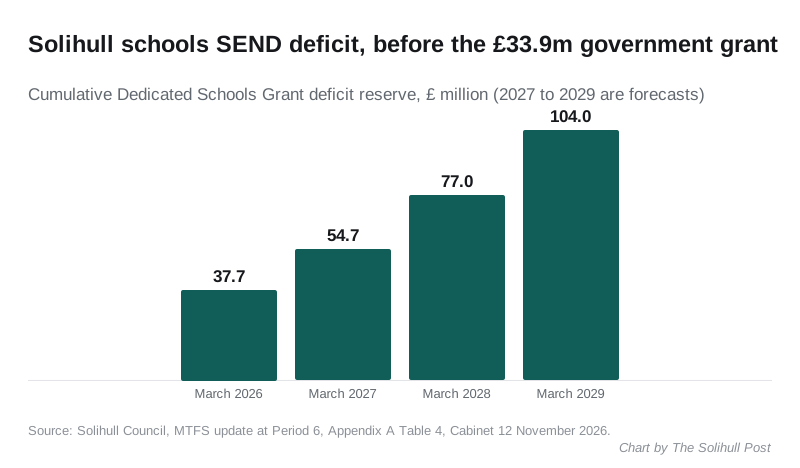
The deficit stood at £37.7 million in March 2026. The council’s reserves table forecasts it at £54.7 million by March 2027. It adds a further £22.3 million in 2027/28 and £27.0 million in 2028/29, reaching £104.0 million by March 2029.
Those figures are before the government’s help. The Department for Education approved Solihull’s SEND reform plan on 2 October. That makes the council eligible for a High Needs Stability Grant of up to £33.9 million, covering 90% of the deficit built up to March 2026.
The other 10% leaves “a minimum £3.8m one-off unfunded pressure” for the council, the report says. The government has not yet said what support it will give for this year’s and next year’s deficits. If councils again had to meet 10%, that would add £3.9 million. From 2028/29 the government will fund SEND spending centrally, and councils will no longer pay for new deficits from their general budgets.
Reserves and next year
The council started the year with £43.6 million of usable reserves. It expects to use £12.4 million of them this year, leaving £31.2 million in March 2027.
A separate £16.3 million reserve, listed as “EFS reserve (fully committed)”, is forecast to be used up entirely this year. EFS is Exceptional Financial Support, the government’s permission for a council in difficulty to use capital money, from borrowing or asset sales, on day-to-day costs.
For 2027/28 the report repeats the warning it first gave in September. If not enough savings can be agreed, and if Exceptional Financial Support “is no longer deemed a viable option or is rejected”, the council’s finance chief would have to consider issuing a Section 114 notice. That is a formal notice that a council cannot balance its budget. The report does not say whether the council will apply for Exceptional Financial Support for next year.
Councillors are working on budget options with officers until January. The budget goes through the scrutiny boards, Cabinet and Full Council in February 2027.
What it means for you
- This year: Cabinet approved the position and “the actions being taken to address budget variances”. The report lists no new service cuts for this year.
- Council tax: the rate for 2027/28 will be set in February. Your current Solihull council tax band charges stay in place until April.
- Following the budget: the Resources and Delivering Value Scrutiny Board looked at the same report on 17 November. The February budget meetings will be listed on the council’s meetings calendar.
Have your say