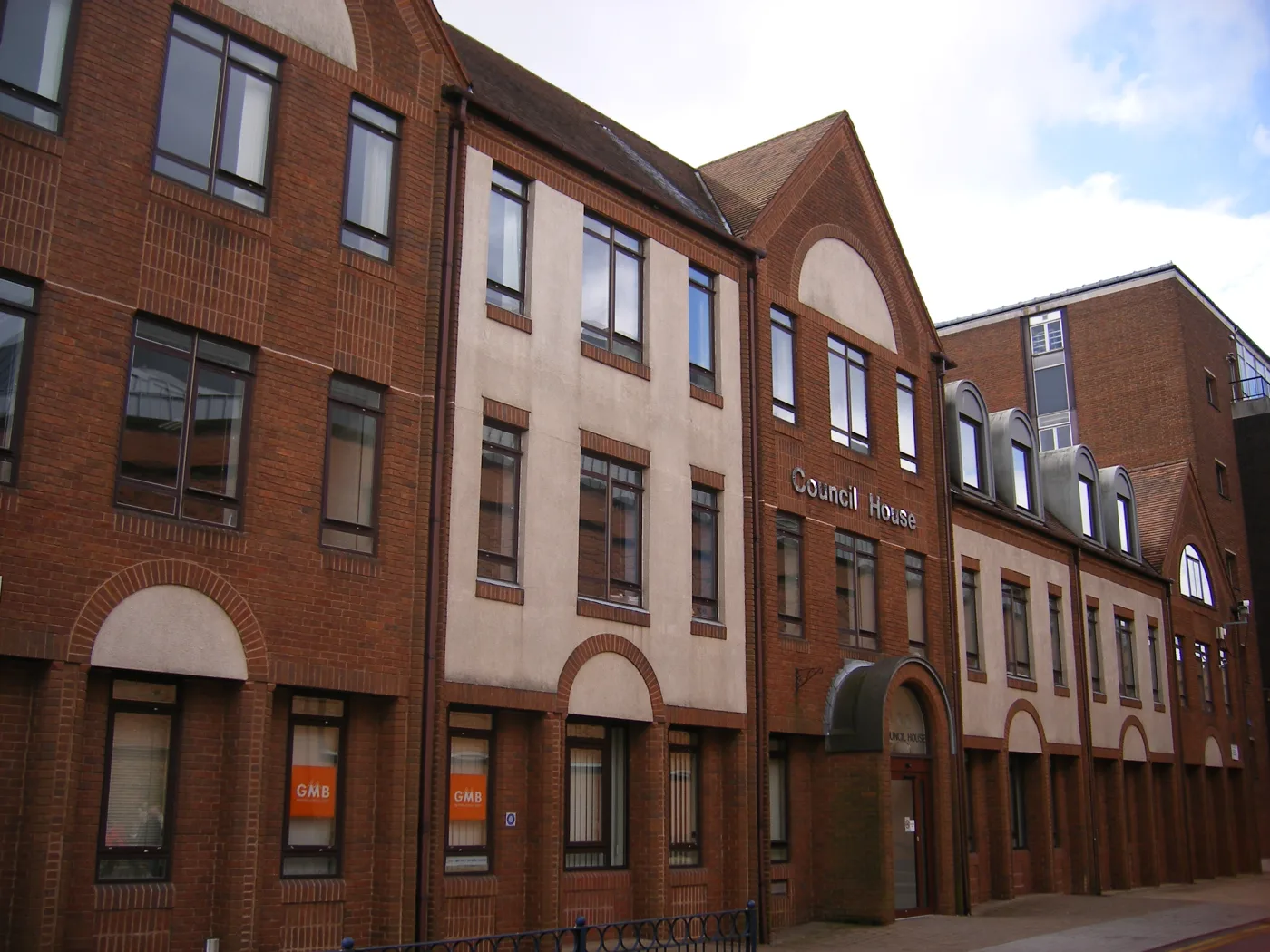

Ofsted and CQC rate Solihull's SEND arrangements 'inconsistent', the middle of three verdicts. Waits are too long and EHC plans vary. Re-inspection in 3 years.
Children with special educational needs in Solihull “frequently wait too long for health assessments”, and their education, health and care plans “vary in quality”, Ofsted and the Care Quality Commission have found in the borough’s first full area SEND inspection in nine years.
The verdict, published on Monday 7 September, is the middle of the three available. Inspectors concluded that “the local area partnership’s arrangements lead to inconsistent experiences and outcomes for children and young people with special educational needs and/or disabilities”, and that the partnership “must work jointly to make improvements” (Area SEND inspection of Solihull Local Area Partnership, Ofsted and CQC).
The inspection ran from 6 to 10 July. The previous one was in October 2017.
What the middle verdict actually means
The council’s own announcement describes the result as “a grading of 2” on “a scale of 1-3” (Solihull Council). Ofsted does not issue numbered grades for area SEND inspections. It picks one of three written outcomes, and each one carries a different consequence.
Because Solihull landed in the middle tier, it is not required to produce a priority action plan and will not get a monitoring inspection. What it does have to do is narrower: Ofsted and CQC “ask that the local area partnership updates and publishes its strategic plan based on the recommendations set out in this report.”
What inspectors said is working
The report is not a bad one, and the specifics matter more than the tier:
- EHC plans are issued on time. “Most EHC plans are issued and updated in a timely way”, so children “typically have their needs assessed within statutory timescales”. That is the part of the system that most often fails elsewhere.
- The Single Panel. Inspectors singled out the multi-agency panel that brings together education, health and care leaders, saying it helps agencies and schools “put timely support in place”.
- The parent carer forum. The partnership “works very effectively” with Solihull Parent Carer Voice, to the point that children and families “critique draft publications” before they go out.
- Family hubs and early help. Early help practitioners are “skilful at developing trusting relationships with families”, and children in the early years “receive the support they require for their speech and language needs”.
- Alternative provision and exclusions. Children educated outside school “often reintegrate successfully”, and those permanently excluded “receive appropriate help”, with the result that many “re-engage with education”.
- Results. Children with SEND in Solihull “generally achieve well in national school assessments compared to others with SEND nationally”.
Inspectors also noted something the council does not usually get credit for: young people with SEND have made podcasts about understanding autism, published on the council’s website, and told inspectors they found doing it “highly rewarding”.
What inspectors said has to change
The criticisms cluster around two things: waiting, and the transition to adulthood.
- Neurodevelopmental and mental health waits. Children “wait too long for neurodevelopmental assessments” and at times “experience a lack of support during these long waits”. Inspectors recorded that “sometimes families turn in distress to GPs for help” rather than hearing from the partnership.
- Therapy waits. Waits for occupational therapy and speech and language therapy “are too long”. The report is blunt about why: “There is not sufficient resource in the services to meet needs”, made worse by “overly complex and unhelpful commissioning arrangements”. Sometimes “children’s and young people’s conditions worsen because of the lack of support”.
- EHC plan quality. Plans are issued on time but “do not routinely or accurately reflect children’s and young people’s health and social care provision”, and “often have minimal information about preparation for adulthood”.
- Turning 18. Provision as young people move into adulthood “is not coherent enough”. Transitions to adult ADHD services “often start too late to be meaningful”. Specialist health transitions “can be fragmented”, particularly for speech and language, dietetic or incontinence support.
- Post-16 mental health. Many young people “miss out on the support they need”, particularly as they age out of child and adolescent mental health services.
- Information not shared. GPs “sometimes do not know” which children with SEND are electively home educated, and “there is not a system to make GPs aware of EHC plan content”.
- Older teenagers have less to do. Younger children get clubs and support groups matched to their needs, but “older young people with SEND can find there is little to do socially that is adapted well to their needs”.
The complaints finding matches the Ombudsman’s own record
One line in the report is worth pulling out, because it is checkable against a separate source. Inspectors wrote: “Many parents and carers report dissatisfaction. The numbers of complaints about SEND are high. Furthermore, many cases reach tribunal without a successful resolution.”
The Local Government and Social Care Ombudsman’s figures for Solihull say the same thing from the other direction. In 2025/26 the Ombudsman investigated 12 complaints about the council and upheld 11, an uphold rate of 92% against an 83% average for metropolitan boroughs (LGSCO council performance statistics). The council did better than average on putting things right early: it had provided a satisfactory remedy before the complaint reached the Ombudsman in 3 of the 11 upheld cases, a 27% rate against a 16% average, and it complied with every recommendation.
The money question sitting behind it
The inspection landed four days after the council’s SEND finances went to scrutiny. Solihull’s cumulative Dedicated Schools Grant deficit for 2025/26 was £37.7 million, and up to £33.9 million of it could be written off if the Secretary of State approves the SEND Reform Plan the council submitted in June. We covered that decision, and the numbers behind it, in Solihull SEND: £33.9m debt write-off rests on this month.
Councillor Karen Grinsell, Leader of the council and portfolio holder for Children and Education, tied the two together in her response to the inspection: “There is a lot of change happening within the SEND system and we are currently awaiting approval from government on our SEND Reform Plan.” On the report itself she said: “I am pleased that inspectors could see first and foremost that families are routinely at the heart of our decisions. We acknowledge that there are improvements to be made.”
David Melbourne, chief executive of NHS Birmingham and Solihull and NHS Black Country, was more direct about the health side, which is where most of the criticism fell. “We know we need to do more,” he said. “We have invested additional funding this year to help reduce waiting times for neurodevelopmental assessments, but we recognise that funding alone will not solve the challenge. Demand for assessments continues to outstrip current capacity.”
He set out four things the ICB says it will do: a “digitally enabled single point of access”, bringing NHS and council therapy services closer together, “local shared care hubs” for ADHD prescribing, and appointing “a single lead organisation for neurodevelopmental services across Birmingham, Solihull and the Black Country”. None of those carries a published date.
What it means for you
- If your child is waiting for a neurodevelopmental or therapy assessment, the inspection confirms the wait is a system problem, not your case being unlucky. Inspectors found no clear accountability for reducing it, and their first recommendation is that partnership and ICB leaders set “clear accountability processes and milestones” for those waits.
- If your child’s EHC plan is due for review, the report’s finding is specific: plans are issued on time but often thin on health and social care provision, on speech and language needs, and on preparation for adulthood. Those are the sections worth reading closely and challenging.
- If your child is approaching 16 or 18, this is the weakest part of the system in Solihull, on the inspectors’ own account. Ask early about the transition to adult services, particularly for ADHD, mental health and therapy support.
- If you have already complained, the Ombudsman upheld 92% of the Solihull complaints it investigated last year. You have to go through the council’s own complaints process first.
- What happens next. The partnership must update and publish its strategic plan against these recommendations. The next full inspection is due within about three years.
Sources
- Area SEND inspection of Solihull Local Area Partnership, Ofsted and the Care Quality Commission, inspected 6 to 10 July 2026, published 7 September 2026. The inspection was carried out at the request of the Secretary of State for Education under section 20(1)(a) of the Children Act 2004, and was led by Ofsted HMI Charlie Fordham with CQC lead inspector Daniel Carrick.
- All Ofsted reports for Solihull Metropolitan Borough Council, for the publication date and the October 2017 previous inspection.
- Area SEND inspections: framework and handbook, Ofsted, for the three outcomes and what follows each.
- Solihull Area SEND inspection report published, Solihull Council, 7 September 2026, for the council’s and the ICB’s responses.
- Solihull Metropolitan Borough Council complaint statistics, Local Government and Social Care Ombudsman, 1 April 2025 to 31 March 2026.
Have your say