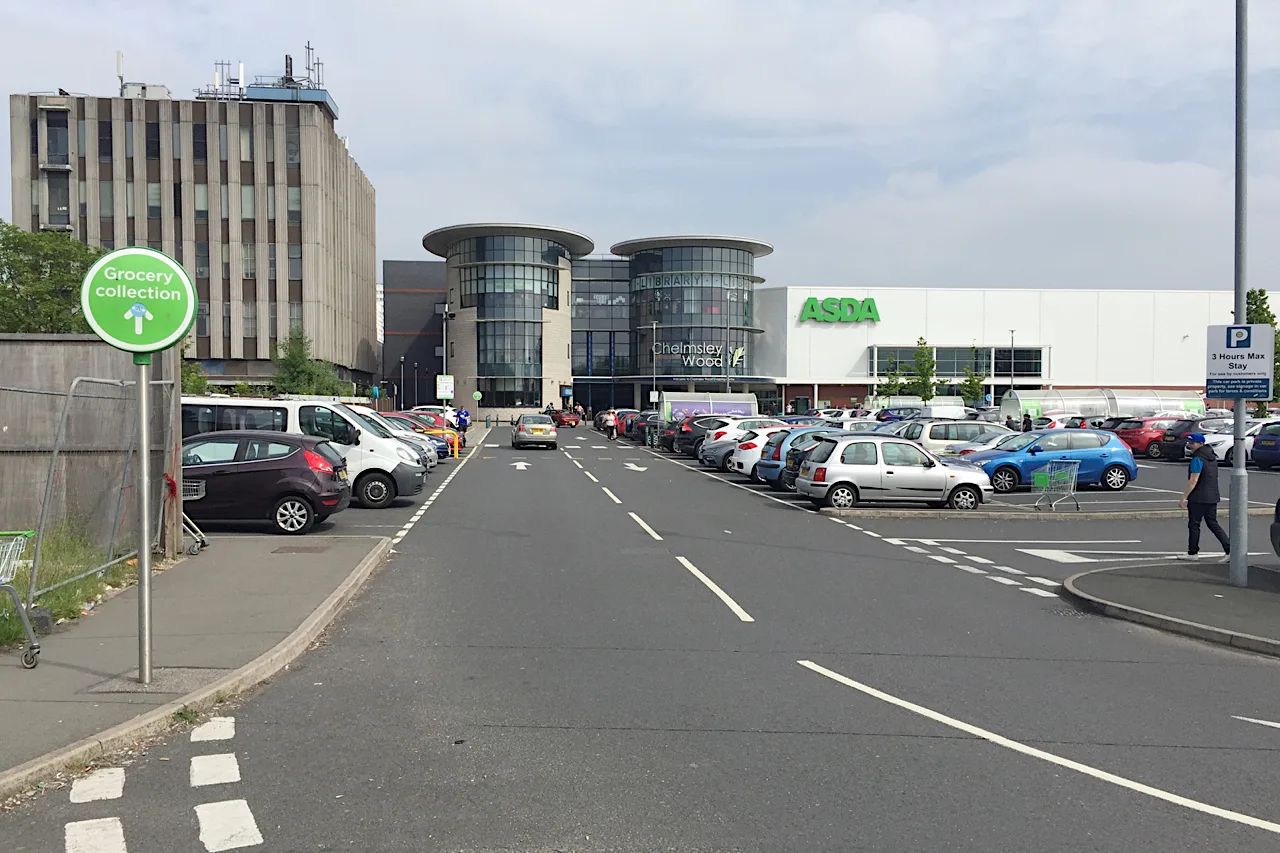

Claims by 18 to 24 year olds in Solihull are up 30% in two years to 1,125, the steepest rise of the seven West Midlands metropolitan boroughs. Older age groups fell.
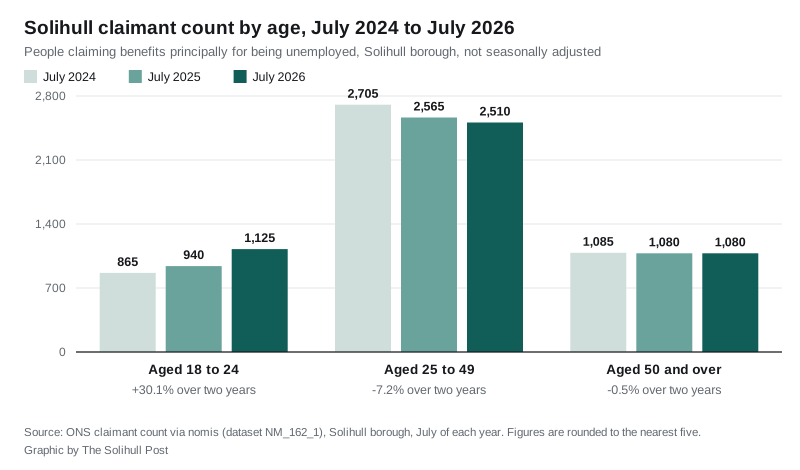
The number of 18 to 24 year olds in Solihull claiming benefits principally for being out of work has risen by almost a third in two years, to 1,125 in July 2026. Every other age group in the borough is flat or falling.
The figures come from the ONS claimant count, published on 18 August 2026 and available by local authority through nomis. (ONS claimant count, dataset NM_162_1)
The borough total barely moved. There were 4,730 claimants in July 2026, 3.6% of residents aged 16 to 64, against 4,665 in July 2024. That is a rise of 65 people in two years, which on its own reads like nothing happening.
Underneath it, two groups are moving in opposite directions:
- 18 to 24: 865 in July 2024, 940 in July 2025, 1,125 in July 2026. Up 260, or 30.1%, in two years.
- 25 to 49: 2,705 down to 2,510. Down 195, or 7.2%.
- 50 and over: 1,085 down to 1,080. Effectively unchanged.
Young adults are now 23.8% of everyone claiming in Solihull, on a group that makes up a far smaller share of the borough’s working-age population.
Steepest of the seven metropolitan boroughs
Youth claims are rising almost everywhere. They are rising faster here.
Across Great Britain, claims by 18 to 24 year olds went from 278,510 in July 2024 to 323,180 in July 2026, a rise of 16.0%. Across the West Midlands region the rise was 18.5%. Solihull’s was 30.1%, close to double the national figure.
Set against the other six West Midlands metropolitan boroughs, Solihull has the steepest two-year rise of the seven.
| Borough | July 2024 | July 2026 | Change |
|---|---|---|---|
| Solihull | 865 | 1,125 | +30.1% |
| Coventry | 2,335 | 2,895 | +24.0% |
| Birmingham | 13,180 | 16,030 | +21.6% |
| Dudley | 1,770 | 2,075 | +17.2% |
| Walsall | 2,100 | 2,440 | +16.2% |
| Sandwell | 2,705 | 3,015 | +11.5% |
| Wolverhampton | 2,300 | 2,475 | +7.6% |
Claimants aged 18 to 24, July 2024 against July 2026. Source: ONS claimant count via nomis.
Widen it to all 14 West Midlands local authorities and only Warwickshire, at +34.5%, has risen faster than Solihull. At the other end, Stoke-on-Trent’s youth claimant count rose 4.2% over the same two years.
Where in the borough
The ward figures are a July 2026 snapshot rather than a trend. Nomis publishes ward-level claimant counts only on the current ward boundaries, and the series does not run back a year, so there is no ward-by-ward comparison to make.
The snapshot itself is stark. Three wards in the north of the borough account for 465 of the 18 to 24 year olds claiming.
| Ward | All claimants | Aged 18 to 24 |
|---|---|---|
| Chelmsley Wood | 665 | 165 |
| Kingshurst and Fordbridge | 600 | 155 |
| Smith’s Wood | 560 | 145 |
| Lyndon | 320 | 75 |
| Shirley West | 260 | 70 |
| Silhill | 235 | 70 |
| Castle Bromwich | 215 | 65 |
| Bickenhill | 265 | 60 |
| Elmdon | 265 | 55 |
| Blythe | 220 | 50 |
| Olton | 240 | 50 |
| Shirley East | 225 | 45 |
| Shirley South | 205 | 40 |
| Meriden | 145 | 35 |
| St Alphege | 130 | 25 |
| Dorridge and Hockley Heath | 90 | 20 |
| Knowle | 90 | 15 |
Source: ONS claimant count via nomis, July 2026. The ward totals for all claimants add to the borough figure of 4,730 exactly. The 18 to 24 column adds to 1,140 against a borough figure of 1,125, because every number is rounded to the nearest five.
Chelmsley Wood has more than seven times as many young claimants as Knowle. It also has the higher share within its own ward: 165 of 665 claimants there are under 25, against 15 of 90 in Knowle.
What the claimant count is, and is not
Three things are worth knowing before anyone quotes these numbers as an unemployment rate.
- It is not the unemployment rate. The claimant count records people claiming Universal Credit or Jobseeker’s Allowance principally for being unemployed. It includes some people who are working but on low enough earnings to be subject to work-search conditions, and it misses unemployed people who do not claim.
- It is not seasonally adjusted. July always carries school and college leavers, which is why every comparison here is July against July.
- Everything is rounded to the nearest five, so small ward figures should be read as approximate.
What it means for you
The council’s Skills for Success team is running free application support drop-ins over the next fortnight. They are aimed at students in school years 11 to 13, so they reach the youngest end of the group these figures are about, not all of it. The dates below are taken from the council’s own summer workshop flyer. (Solihull Council, Skills for Success summer workshops)
- Tuesday 25 August, 9.30 to 11.30am and 1.30 to 3.30pm, Room 4, Civic Suite, B91 9SE
- Wednesday 26 August, 9.30 to 11.30am, Riverside Family Hub, B37 5DP
- Wednesday 26 August, 1.30 to 3.30pm, Elmwood Place Family Hub, B36 0UG
- Tuesday 1 September, 9.30 to 11.30am, Room 4, Civic Suite, B91 9SE
- Wednesday 2 September, 9.30 to 11.30am, Riverside Family Hub, B37 5DP
- Wednesday 2 September, 1.30 to 3.30pm, Elmwood Place Family Hub, B36 0UG
The team takes enquiries at skillsforsuccess@solihull.gov.uk.
Two of the three venues, Riverside Family Hub in Chelmsley Wood and Elmwood Place in Castle Bromwich, sit in the part of the borough where the figures are highest, which is at least the right geography.
For anyone reading this as a picture of the borough rather than a personal problem: a rising young claimant count and a falling one among people aged 25 to 49 is not a single story about Solihull’s economy. It is two, and the second one, a claimant count among 25 to 49 year olds that has fallen for two years, rarely gets mentioned.
We will run these figures again when the August release lands next month. Our Solihull house prices page tracks the other number that decides whether young adults can stay in the borough once they are working.
Sources
- ONS claimant count, dataset NM_162_1, via nomis, July 2026 release, published 18 August 2026
- ONS labour market overview, August 2026
- Solihull Council, Skills for Success summer workshop flyer
Have your say